How to Troubleshoot Your AC: Top Causes & Fixes
Summer heat hits hard. Office workers sweat through meetings. Homeowners toss and turn at night. Your AC should bring cool relief—but when it sputters or stops, panic sets in. Briggs Heating is here to help, 24/7.
We know the urgency. We know the cost of downtime. Whether you’re a hands-on homeowner or a building manager juggling tenant calls, this guide gives you the tools to understand, check, and fix the most common AC problems. And you’ll know exactly when to call in certified emergency HVAC help.
Common AC Symptoms (and What They Mean) 🛑
Every AC problem has a story. Some are obvious, others hide in plain sight. Here are the most frequent trouble signs:
Not Cooling
- Air comes out, but the room never cools down.
- Thermostat is set low, but sweat beads up.
- Maybe the air is lukewarm, or barely moving.
Won’t Start
- You hit “cool”—nothing happens.
- No hum, no fan, no lights.
- Sometimes, the indoor unit runs but the outdoor one sits silent.
Odd Noises
- Rattling, buzzing, or grinding.
- High-pitched squeals, or deep groans.
- Sometimes it’s just a loose panel. Sometimes it’s a broken part inside.
Other Red Flags
- Water pooling near the unit.
- Strange smells—musty, burning, or chemical.
- Sudden spike in your energy bills.
Quick Safety Checklist (Before You Touch Anything)
AC systems combine high voltage, refrigerant under pressure, and spinning fans. Safety comes first. Pause and run through these quick checks:
- Power off: Always turn off the AC at the breaker before inspecting.
- Watch for water: Avoid standing in pooled water near electrical panels.
- Smell gas or burning? Evacuate and call emergency services (fire or utility company).
- Never open sealed refrigerant lines: Only licensed technicians can handle these safely.
- Keep children and pets away: During any inspection or repair.
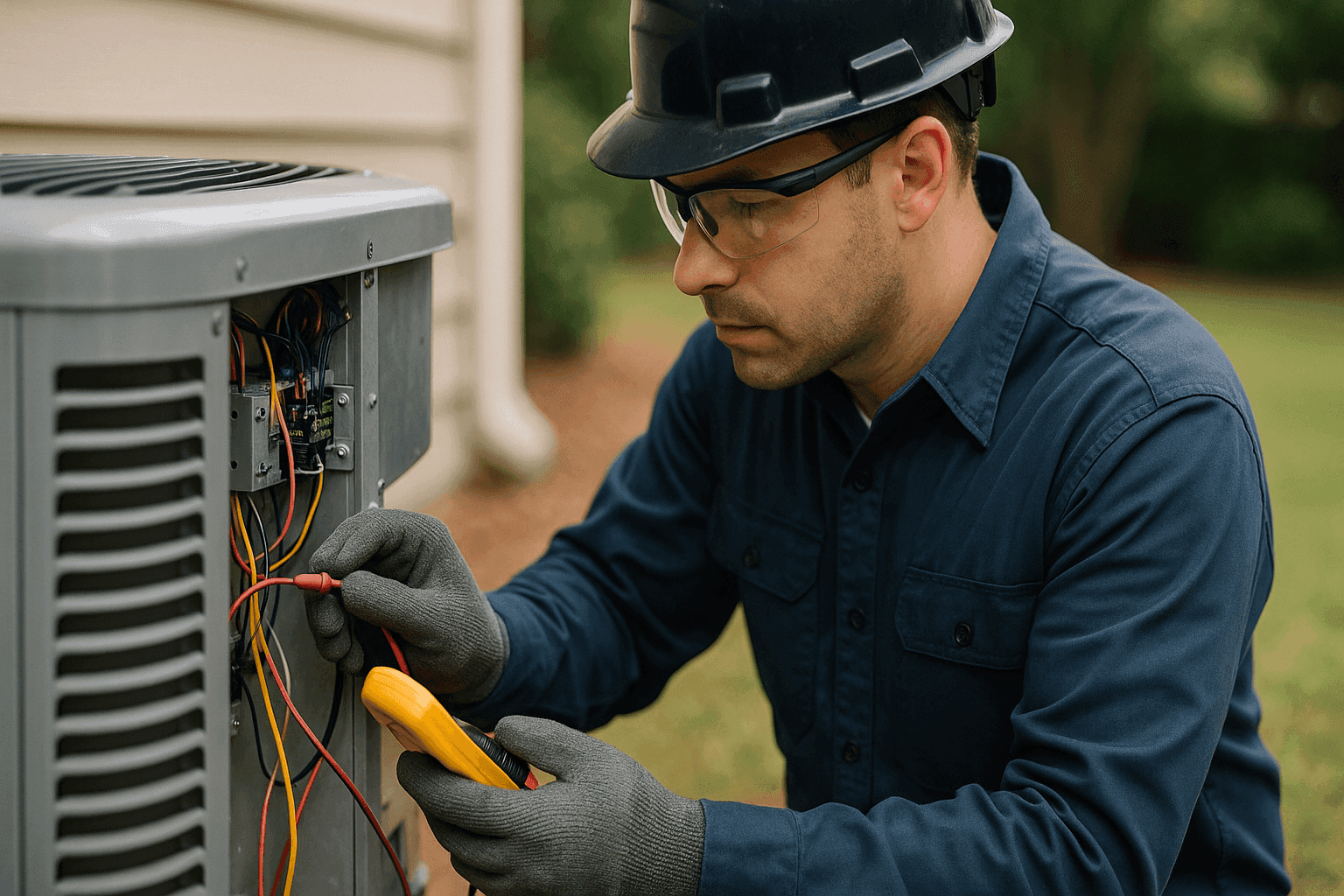
- Wear gloves and eye protection: Even basic filter changes stir up dust and debris.
The U.S. Consumer Product Safety Commission and OSHA recommend these steps for anyone near household HVAC equipment.
DIY Checks: Simple Fixes Before You Call
Not every AC issue needs a pro. Many fixes are as simple as flipping a switch or swapping a filter. Here’s where to start:
1. Check the Thermostat
- Is it set to “cool” and not “fan” or “heat”?
- Is the set temperature below room temperature?
- Try new batteries if it’s a digital model.
2. Inspect the Air Filter
- Dirty filters block airflow and freeze coils.
- Pull out the filter and hold it up to light—if you can’t see through, replace it.
- Most homes need a new filter every 1–3 months.
3. Circuit Breakers & Power
- Check your electrical panel for a tripped breaker.
- Some outdoor AC units have a separate disconnect box—make sure it’s “on.”
- Reset any tripped breakers, but if they trip again, call a professional.
4. Air Vents & Returns
- Make sure all supply and return vents are open and unblocked.
- Furniture and curtains can cut off airflow.
5. Outdoor Unit
- Remove leaves, debris, and grass from around the outdoor condenser.
- A two-foot clear zone helps airflow and efficiency.
6. Drain Lines
- Look for water pooling at the indoor unit—clogged drains cause leaks and shutoffs.
- Gently clear with a wet/dry vacuum at the exterior drain, if you’re comfortable.
When to Call a Pro: Serious or Dangerous Issues
Some problems need a certified emergency HVAC technician. Don’t risk your safety—or your system’s health—if you see:
- Refrigerant leaks: Hissing, bubbling, or visible frost on lines. Only professionals can legally handle refrigerant (EPA Section 608).
- Electrical issues: Burning smells, repeated breaker trips, or exposed wiring.
- Major water leaks: Fast, ongoing water around the unit or in ceilings/walls.
- Compressor or fan won’t start: If basic resets don’t work, deep electrical or mechanical faults may be to blame.
- Repeated short cycling: AC starts and stops every few minutes—this strains the whole system.
- Frozen coils: If you see ice, turn off the unit and call for help. Running it can crack pipes and damage the compressor.
Remember: Modern ACs rely on tightly balanced pressures and electronics. A wrong move can void warranties—or cause injury.
What Pros Do On Arrival
When you call Briggs Heating for emergency HVAC service, here’s what to expect:
- Thorough diagnostics: We use digital gauges, thermal cameras, and pressure sensors.
- Electrical testing: Multimeters check for shorts or failed components.
- Refrigerant checks: We measure charge, look for leaks, and follow EPA safety standards.
- Mechanical inspection: Motors, fans, capacitors, and belts are checked for wear or damage.
- Full system test: We run the system through all modes (cool, heat, fan, auto) to catch intermittent faults.
Certified technicians document findings and explain next steps—repair, replace, or maintain—based on code and manufacturer specs.
Prevention & Maintenance: Keeping Your Cool Year-Round 😎
A little care goes a long way. Most AC breakdowns trace back to missed maintenance. Here’s what you can do:
- Replace filters regularly: Every 1–3 months, or more for pets/allergies.
- Schedule seasonal tune-ups: Spring and fall are ideal.
- Keep outdoor units clear: Trim bushes, rake leaves, and keep at least two feet of space.
- Check thermostat programming: Avoid wide day-to-night swings.
- Seal duct leaks: Leaky ducts waste cooled air—have them checked every few years.
- Monitor humidity: Use dehumidifiers or whole-house fans as needed.
The Department of Energy and ASHRAE both stress that regular maintenance extends system life and saves energy.
Costs & Time Factors
Every repair is different. Some fixes take minutes, others require parts or specialized tools. Here's what to expect:
- Filter changes & thermostat resets: 5–15 minutes, minimal cost.
- Clearing drain lines: 15–30 minutes, depending on access.
- Compressor or refrigerant work: 1–3 hours, with variable parts and labor.
- Major leaks or electrical faults: Can take several hours—sometimes requiring follow-up visits.
Emergency HVAC repairs (especially after-hours) often come with higher rates due to urgency and technician availability.
When It’s an Emergency
Not every AC issue is a true emergency. But here are situations where you should call for 24/7 emergency HVAC help—right now:
- Heat waves or extreme cold: Health risks for infants, elderly, or medical conditions.
- Major water leaks: Threat to property or safety.
- Electrical burning smells: Potential fire hazard.
- Complete system failure: In busy commercial properties, downtime can mean lost revenue or tenant complaints.
If you feel unsafe or unsure—always err on the side of caution.
FAQ: Fast Answers to AC Troubleshooting
Q: Why does my AC freeze up?
A: Dirty filters, blocked airflow, or low refrigerant can ice up coils. Turn off the unit and call for service.
Q: What’s the average lifespan of a home AC?
A: Most last 10–15 years. Regular maintenance can extend this by several years.
Q: How often should I have my AC serviced?
A: At least once a year—ideally before summer starts.
Q: Can I add refrigerant myself?
A: No. Only EPA-certified technicians can handle refrigerant due to federal regulations.
Local and Seasonal Considerations 🌦️
In our region, summers can be humid and winters unpredictable. Power outages, pollen, and construction dust all take their toll on HVAC systems—residential and commercial. Seasonal spikes mean technicians book fast, so early maintenance is smart. Remember: Running your AC in spring before peak heat helps catch problems early.
The Bottom Line
Some AC issues are quick fixes. Others need trained hands and special tools. Knowing the difference saves time, money, and stress. For everything else, Briggs Heating is just a call away—day or night.
Call Briggs Heating now — or reach us anytime at 877-748-7966 .